

#166 "Design courage"
..and a cosmic table lamp 🌖
Hello and a very belated Happy New Year! January flew past with me immersed in too many side-projects and I have neglected writing to you for longer than I intended. I’ll be making it up to you with a bumper issue. I’ve been reflecting on what courage means when it comes to design and admiring the choices in a beautifully strange 1960’s Italian table lamp.
If you fancy trying out one of the projects I've been working on—a money beliefs quiz with some AI personalisation magic—hit the button below. Otherwise, on with this week’s Design Lobster! 🦞
Something to think about: Design as an act of courage
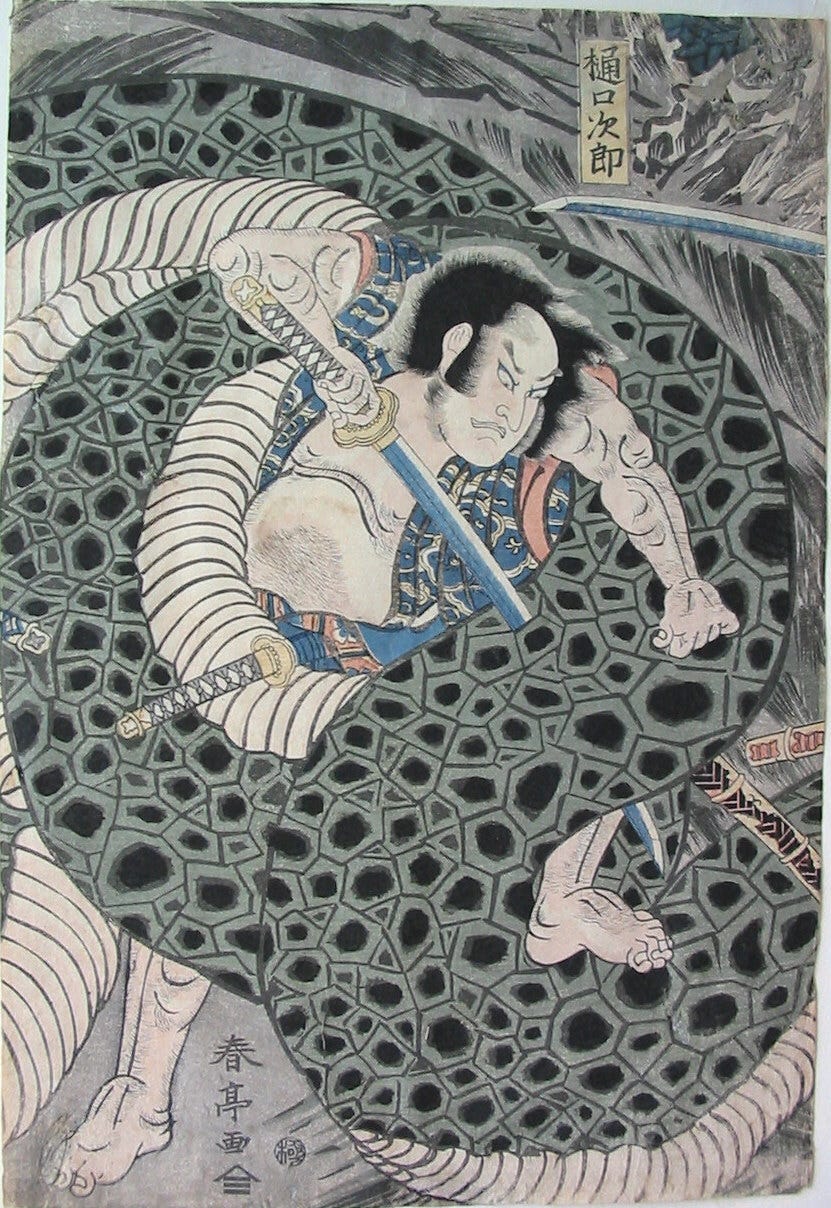
Something that has always impressed me when working with a great designer, is their willingness to stay suspended in ambiguity—curious and gently dissatisfied—just a little bit longer than everyone else. They’ll explore that little bit more widely, push an idea a little bit further, keep their team and manager at bay whilst they push through a couple more iterations of an idea.
It’s hard and scary to do this. Especially in larger organisations that value punctuality and the smooth running of their operations over the absolute quality of work. Missing a deadline or keeping an important stakeholder waiting can feel like more risk than its worth, especially when the outcome is uncertain. As with all creative work, there is no guarantee that an extra pass will yield the breakthrough that you hope.
But what I’ve observed is that, more often than not, just a little bit of extra stewing time can be the difference between work that is fine and work that is genuinely great. Those one or two more turns can sharpen things up, make you realise what is truly essential or where the real problem is that you need to solve.
I’ve been thinking about this a lot recently because of the increasing role that AI tools are playing in my own design process. On the one-hand it has been wonderful, because I can work directly in the material of code and conjure up far richer versions of my ideas, but on the other hand when every output looks “finished” at every step of the way, strong internal conviction is needed to push through the ordinary iterations and keep pushing the tool to go further and further to arrive somewhere interesting and special.
As expectations around use of these tools grows in companies, I worry that an inherent organisational bias for speed over quality will make it even harder to make the case for doing that crucial extra iteration. Learning how to gracefully resist these voices seems to me like it could become a key design skill of the future.
Design takeaway: How will you display design courage in 2026?
🧿 I wrote a couple of years back on creative discontent and the power of imagination
Something nice: L’Eclisse table lamp
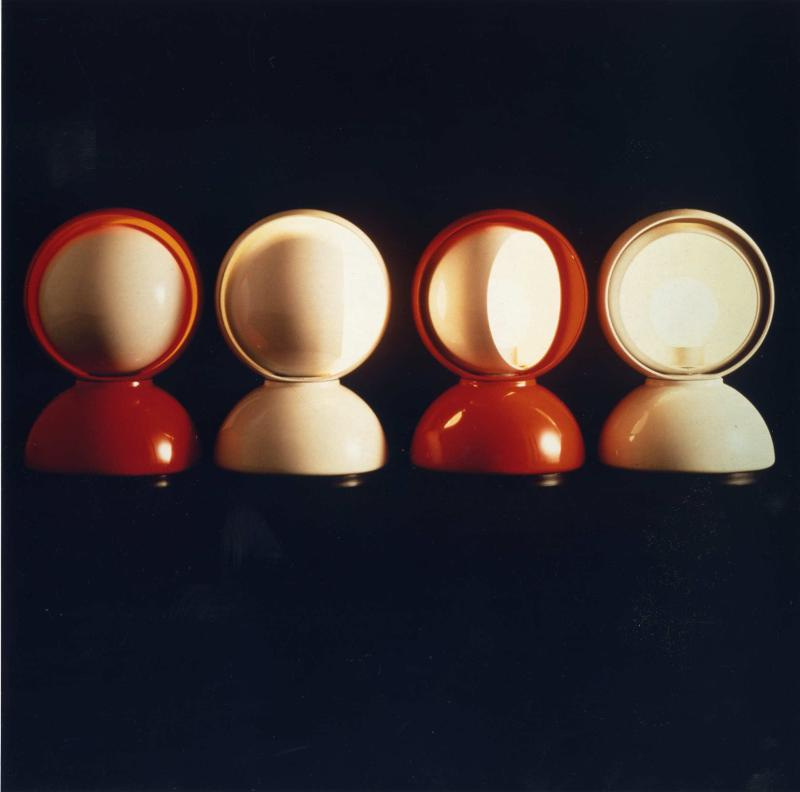
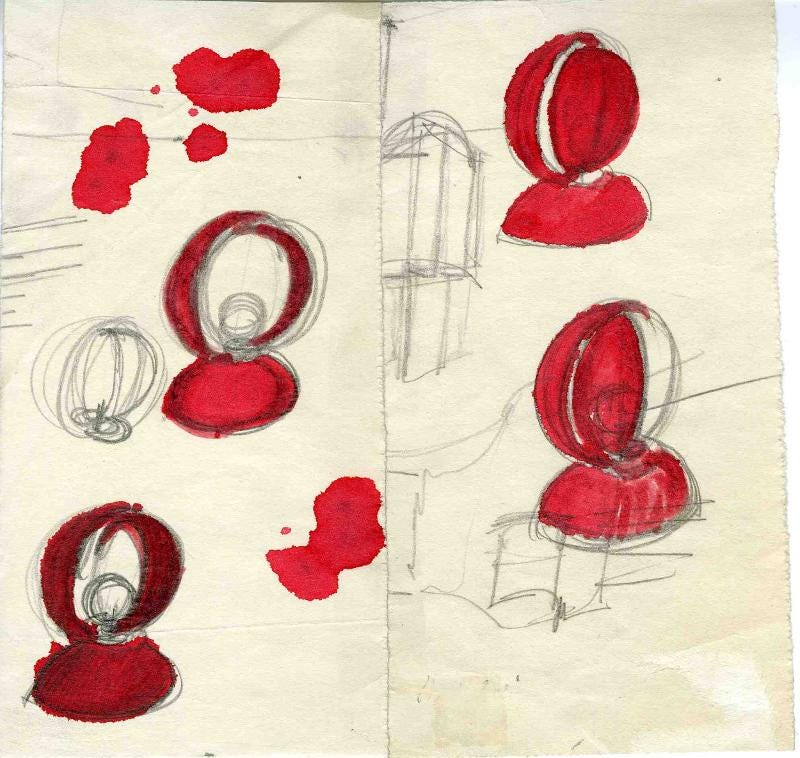
In 1965, the Italian architect and designer Vico Magistretti was traveling on the Milan Metro thinking about Jean Valjean’s lantern in Victor Hugo’s novel Les Misérables. In one part of the book, Valjean is traveling through Paris in secret, using a “dark” or “shuttered” lantern to hide the beam of light in order to evade detection. In a flash, Magistretti had the idea for a lamp that took this principle and extended it in a futuristic direction as a set of interlocking spheres. In haste he sketched out his idea with blotchy red ink on his paper subway ticket, before developing the design over the next year for mass production with manufacturer Artemide.
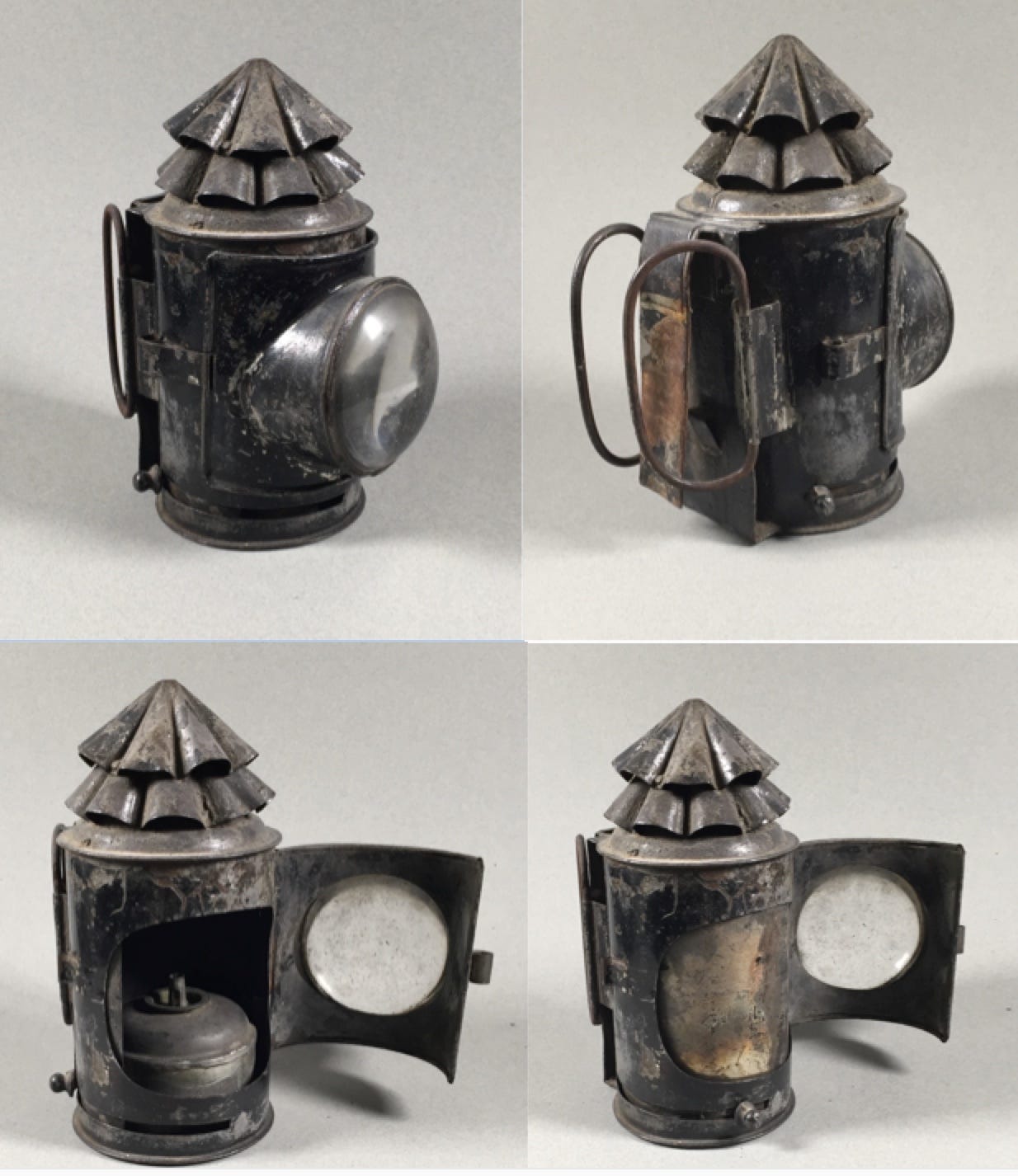
The light came to be known as L’Eclisse due to the cosmic parallels with the motion of its two hemispherical shells. The core technical innovation was to allow the inner hemisphere to rotate smoothly by hand, permitting an individual to have a focused or diffused light, or somewhere in between depending on their preference. Reportedly, the heat emitted from incandescent bulbs meant that this was a somewhat finger-burning affair in the original version, though this is no longer an issue for contemporary LED-powered versions.
The final design was appropriately space-age for this optimistic moment of the 20th century, whilst retaining the platonic formal qualities that Magistretti’s work was known for. Indeed it captured the era so well that in 1967 it won Italy’s most prestigious design prize the Compasso d’Oro.
Design takeaway: How does your design invite touch?
🫰In Design Lobster #149 we explored design you can “fidget” with

Enjoying Design Lobster? Share it with a friend, colleague or fellow designer.
What I’ve been reading
Design is more than code by Karri Saarinen
It sounds philosophical, but what I’ve found is that the most common reason design projects drag or fail is that the problem wasn’t clear. People won’t agree on solutions, because they have different problems in mind. The solution becomes a compromise of many different problems, instead of a clean solution to one major problem.
Some timely reflections on what it means to design right now one of the founders of Linear. Well worth your time.
The main function of an icon is to help you find what you are looking for faster. Perhaps counter-intuitively, adding an icon to everything is exactly the wrong thing to do. To stand out, things need to be different. But if everything has an icon, nothing stands out.
Nikita schools the Apple Design Team in some human interface basics—a refreshing and at times withering put down of Apple’s design choices in the latest version of MacOS.
Let’s talk about some of the reasons you shouldn’t use Gas Town. I could think of more, but these should do. First of all, the code base is under 3 weeks old. On a scale of “polished diamond” to “uncut rough” to “I just smuggled it 400 miles upriver in my ass,” I’m going to characterize Gas Town as “You probably don’t want to use it yet.” It needs some Lysol. It’s also 100% vibe coded. I’ve never seen the code, and I never care to, which might give you pause.
Amidst all the bizarre AI-agent headlines of the past few weeks I had to share this Mad-Max style attempt to create a whole “town” of agents working chaotically on one developer’s software projects. It’s a very technical piece but reads like a Steampunk thriller.
Have a courageous week,
Ben 🦞
Enjoyed this week’s Design Lobster? Let me know by clicking the heart button ❤️
👇
Great thoughts! Love this newsletter about design courage, it touches points that are hard to identify and explain.
The story about Eclipse is golden!